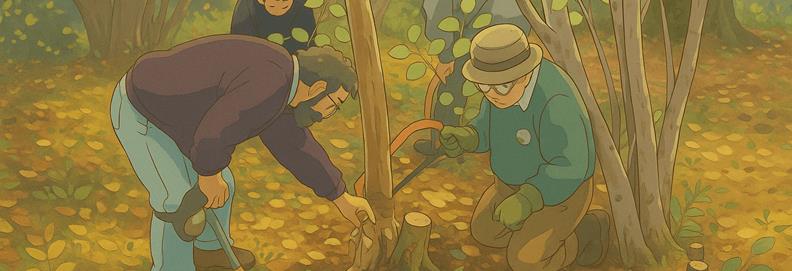
Chapter 1 – Why Coppicing Matters
This document is a compilation of ideas and practices gleaned from other projects, researchers and woodland management organisations. It represents a possible way forward for a Durham-specific project aimed at restoring both coppice wood and coppicing as a craft livelihood.
Community-based coppicing is an ancient practice with fresh relevance in the 21st century. This chapter introduces the core themes—ecology, economy, and community—that later chapters explore in depth.
1.1 The Practice of Coppicing
Coppicing is the ancient practice of periodically cutting broadleaf trees back to near ground level, stimulating vigorous multi-stem regrowth from the living stool.
By working with the tree’s natural ability to sprout, coppicing provides a reliable supply of straight poles and firewood while keeping the parent tree alive.
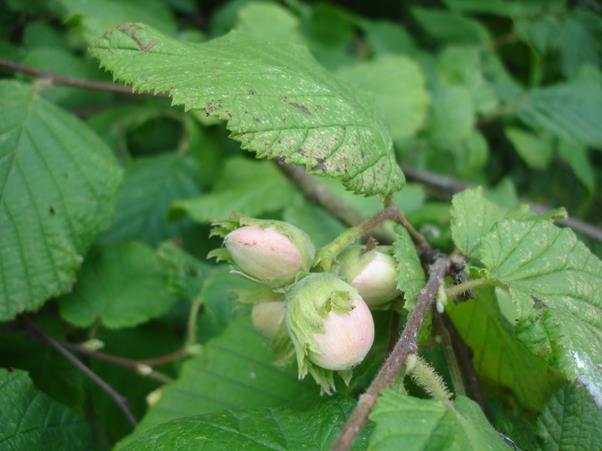
Species such as hazel, ash, sweet chestnut, willow and oak respond especially well, providing a renewable supply of poles every 7–20 years.
Coppicing has been practised in parts of Europe for at least 6,000 years, making it one of the world’s oldest forms of managed woodland. By the Middle Ages it underpinned rural economies across Britain and continental Europe, supplying everything from wattle for house building to charcoal for iron smelting.
Coppice rotations maintained a continual patchwork of light and shade, creating exceptionally rich habitats for flowers, insects, and birds.
Traditional examples survive in places such as the Chiltern Hills, where hazel has been cut for centuries to supply hurdle makers and thatchers, and in the Blean Woods of Kent, where sweet chestnut is still worked for fencing materials.
These long-lived systems demonstrate how people once balanced timber production, biodiversity, and cultural identity—an approach now regaining interest as communities seek renewable materials, sustainable livelihoods and climate-resilient woodland management.
“Coppice systems are among Europe’s oldest forms of sustainable forestry.”
—Rackham (1990)
1.2 Coppice Ecology & Climate Resilience
Rotational cutting opens the canopy, creating a shifting mosaic of light conditions. Sunlit glades allow orchids, butterflies, and woodland birds to flourish, while a cycle of regrowth maintains structural diversity.
This constant cycle of disturbance and renewal produces habitat diversification, maintaining a structural variety—open glades, young scrub, and mature standards—that supports far higher biodiversity than high forest of uniform age.
Coppice woodlands also contribute to wildlife support beyond plant and insect life. The variety of age classes provides shelter and feeding opportunities for small mammals, bats, and owls, while deadwood from cut stems enriches fungi and beetle populations.
By mimicking natural disturbance regimes, coppicing sustains ecological processes that would otherwise fade in static, closed-canopy woods.
From a climate perspective, the system offers notable resilience. Rapid stool regrowth sequesters carbon efficiently, and the continuous cycle of harvest and regrowth creates a standing carbon stock less vulnerable to catastrophic loss.
Mixed “coppice-with-standards” stands are also less prone to windthrow than dense high forest, because varied tree heights break gust patterns (Peterken 2013).
“Light is the engine of woodland biodiversity.”
—Peterken (Woodland Conservation and Management, 2013)
1.3 The Economics of Coppicing
Economically, coppicing follows the principle of low-intensity development.
Rather than clear-felling and replanting, managers thin and rotate coupes, maintaining continuous cover and a living root system that stabilises soils and stores carbon. This creates a steady, renewable flow of small-diameter wood with minimal capital investment, aligning economic returns with long-term ecological resilience and community values.
Small-scale coppice work can thrive where industrial forestry cannot. Because the system relies on periodic cutting of small-diameter stems rather than large timber harvests, operations can be carried out with hand tools and light machinery, giving access to steep slopes, wet ground, and fragmented holdings that would defeat heavy harvesters.
This low-impact approach keeps soils intact and allows continued use of paths and rides, making the work compatible with public access and sensitive habitats. Whole-tree utilisation—stakes, firewood, pea sticks, charcoal—turns what would be waste into saleable products including charcoal, wattle, spiling, thatching spars, tool handles, furniture, and other higher-value products.
Markets for these products range from local craft sales and farm shops to specialist suppliers for heritage construction, biomass energy, and ecological restoration projects.
Case in point: Borthwood Copse (Isle of Wight) funds management entirely from local charcoal and pole sales.
DEFRA (2020) notes that “low-intensity harvesting can yield high social and biodiversity value per hectare.”
1.4 People and Place
Community participation strengthens stewardship and builds rural livelihoods.
Models include volunteer sessions, paid seasonal work, self-employment, and barter exchanges, ensuring that people with different resources and skills can contribute. By working side-by-side and generating income for the project, participants build a shared sense of stewardship that outlasts any single funding cycle.
Projects like Hill Holt Wood (Lincolnshire) combine training, woodland management, and social enterprise to create enduring employment. Volunteers and community groups gain practical skills and a stake in their landscape; contractors gain income or materials, cooperatives share tools, insurance, and marketing.
Projects like Coppice Durham prioritise restoring neglected and unhealthy woodlands on public land—where local authorities own the ground but lack the resources for regular management.
Access agreements, negotiated with councils or land managers, open the door for community groups to carry out low-impact coppicing and the development of skilled work, while safeguarding public rights of way and ecological values. Coppice project governance ranges from informal neighbourhood groups to formal community-interest companies.
“The woods bind us together as surely as the stools resprout from their roots.”
—Community woodland leader, quoted in Small Woods Association report (2019)
1.5 Pathways to Action
The following chapters outline practical steps for turning vision into reality. The topics have been chosen as relatively distinct themes deserving their own focus.
- Land Access & Tenure – negotiating access; understanding legal, social & landscape context.
- Volunteer & Community Engagement – promoting, recruiting and training.
- Coppicing Practice – rotations, species, and safe working methods.
- Habitat Diversification & Wildlife Support – using coppice cycles to enhance biodiversity.
- Production & Markets – charcoal, wattle, furniture, and other high-value products.
In fairness, there should be sections on Enjoying Nature, Health Benefits, Woodland Heritage, and so many more. These will come about of their own accord, given the development of a basic scheme as outlined here.
A Note on Chapter Organisation
Each chapter is organised into three nested rounds of development —an organising method using the apt metaphors of nests, weaving, circularity, and resilience.
I compiled this document as an outline for myself, and potentially for colleagues wanting a brief overview of the things I'll be thinking about as I proceed.
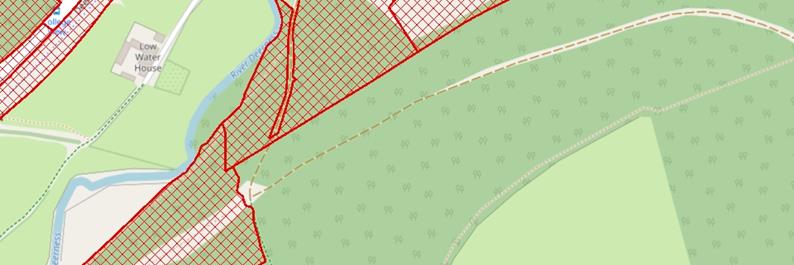
Chapter 2 – Land Access & Tenure
Securing a right to manage woodland is the first practical step for any community coppice scheme. This chapter sets out the key routes—licences, agreements, and partnerships—and suggests successive development rounds for turning initial ideas into durable arrangements.
2.1 Ownership & Management of Local Authority Woodlands
Many public woodlands are owned by county, borough, or parish councils, but responsibility for their management can be fragmented across departments such as Parks, Estates, Highways, or Environmental Services. Waves of reorganisation mean that even staff may be unsure who holds day-to-day authority for a given patch. So, before any pilot scheme can begin, it is vital to get a sense of this internal landscape, identify the decision-makers, and gauge whether there is enough capacity to justify a formal approach.
Round 1 – Management Responsibility
- Start by establishing a paper trail. Use council websites, Freedom of Information requests, or local contacts to determine both the legal owner and the operational manager.
- Check whether the site is classed as open space, nature reserve, highway verge, or heritage woodland—each may involve a different department.
- Record all findings in a simple contact log to track conversations and avoid duplication as the project moves forward.
Round 2 – Stakeholder Engagement
- Once key departments are identified, begin a round of informal conversations not only within the council but also with the people who use or value the woodland.
- Reach out to biodiversity officers, parks managers, and parish councillors, but also invite local residents, walkers, allotment societies, wildlife groups, and “friends of” organisations to early discussions.
- Share a concise briefing that highlights the ecological gains—habitat diversification, wildlife corridors, and climate resilience—while emphasising community benefits such as amenity improvements, training opportunities, and other beneficial outcomes.
- By involving both authority staff and community users from the outset, the project builds an internal network of champions and a public constituency that can guide the proposal through council processes and give it lasting local legitimacy.
Round 3 – Pilot Feasibility & Site Assessment
- If interest emerges, propose a small pilot area to demonstrate the value of coppicing.
- Arrange a joint site walk with council staff and potential community partners to assess woodland character, current condition, and access routes.
- Note opportunities and constraints: presence of invasive species, public footpaths, veteran trees, or heritage features.
- This shared visit builds mutual understanding and generates the observations needed for a first-stage management outline.
2.2 Access Agreements & Permissions
Formal licences or management agreements grant rights to cut and maintain coppice while leaving ownership unchanged. Typical terms cover cutting rotation, extraction methods, public liability, and revenue sharing. However, some authorities—especially those with limited staff—may prefer light-touch or informal arrangements provided they retain oversight and the ability to adjust or terminate the scheme.
Whether formal or informal, success depends on transparent procedures: clear communication, joint site assessments, and regular reviews to ensure ecological and community goals are being met.
Round 1 – Pilot Understanding
- Agreement Type: Offer the council a choice between a simple letter of understanding (informal) or a pilot management licence (formal).
- Pilot Scope: Identify multiple coupes for a 1–2-year trial, giving enough area and time to demonstrate ecological and economic benefits without locking the authority into a long contract.
- Assessment Procedures: Conduct a joint site survey to evaluate stand condition, access routes, sensitive habitats, and soil risk.
- Key Terms: Propose provisional cutting rotations, extraction methods (hand tools vs. small machinery), public-liability cover, and revenue-sharing or cost-neutral options.
Round 2 – Scaling Up
- If the pilot is successful, negotiate a longer agreement (e.g., 5–10 years) or renew the informal arrangement with expanded coupes.
- Include adaptive clauses for biodiversity targets, public access, and community participation.
- Emphasise that council oversight remains intact and that operations remain low-impact and grant-eligible.
- Keep your liaison officer (and others) up to date!
- Example: Suffolk Wildlife Trust uses renewable five-year coppice licences balancing community use with habitat goals, while several parish councils in Oxfordshire operate on simple memoranda of understanding that can be updated annually without legal complexity.
Round 3 – Renewal & Refinement
- At scheduled reviews, update the agreement to reflect monitoring results, new grant opportunities, or changes in council priorities.
- Add or remove areas as needed and consider integrating community partners (e.g., Friends groups) as co-signatories to share responsibility.
2.3 Longer-Term Management
Even with licences or informal agreements in place, coppice restoration requires continuity of care to keep woodlands healthy.
Public land management can change hands through departmental reorganisations, staff turnover, or political shifts, so building resilience into agreements is as important as the work itself. Keep in mind that this project came about in response to shrinking local authority capacity. Trees planted 40 years ago have had little or no care in the time since. At the same time, budgets have collapsed, forestry teams have disappeared. So low-intensity, community-driven forestry is perhaps the necessary way forward.
Round 1 – Foundations
- Shared Documentation: Keep management plans, coupe maps, and biodiversity objectives stored with both the council and the coppice group to ensure institutional memory.
- Monitoring & Reporting: Establish simple annual reporting—photos, coupe logs, species sightings—so progress is visible even if key personnel change.
- Exit Clauses: Include clear but flexible terms for winding down or transferring responsibilities should circumstances shift.
Round 2 – Strengthening Continuity
- Multi-Year Planning: Align coppice rotations (often 7–20 years) with council budget cycles and land-management plans.
- Community Anchors: Engage local residents, Friends groups, or schools to create a broad base of support that outlasts individual staff or councillors.
- Funding Links: Identify grants or stewardship payments that encourage long-term management and can survive administrative changes.
Round 3 – Adaptive Stewardship
- Periodic Reviews: Schedule joint reviews every 3–5 years to update ecological targets, adapt to climate impacts, or revise coupe sizes.
- Succession Planning: Develop a protocol for passing operational knowledge to new members, contractors, or council officers.
- Integration with Wider Strategies: Seek inclusion in borough or county biodiversity action plans so coppicing remains a recognised and funded activity.
- Example: The Wyre Community Forest in Worcestershire maintains a shared digital management plan accessible to both volunteers and council officers, ensuring continuity despite changes in staffing or governance.
Historical Roots of Community Coppicing
- Shared Rights: In medieval and early-modern Europe, villagers often held common rights to cut poles, gather firewood, or collect brush, even when a lord or estate owned the land.
- Collective Labour: Cutting a coupe required many hands. Neighbours organised winter “wood days,” exchanging labour for bundles of fuel or small timber.
- Local Markets: Surplus poles, charcoal, and tan-bark entered parish or market-town trade, giving rural families a small but vital cash income.
- Customary Rotations: Communities enforced cutting cycles (typically 7–20 years) to keep the stools vigorous and ensure future harvests.
- These customs show that coppicing was historically a social economy of shared effort and benefit—a model modern community woodlands can adapt for today’s ecological and social goals.
Chapter 2 References
- Forestry Commission. Community Woodland Guidance, 2020.
- Small Woods Association. Community Woodland Legal Toolkit, 2019.
- Woodland Trust. Working With Landowners, 2021.

Chapter 3 – Participation & Community Engagement
Community energy is the lifeblood of small-scale coppicing. People may join as volunteers, take on paid tasks, operate as self-employed contractors, contribute skilled work on a barter basis, or simply share knowledge.
Recognising these different modes of involvement helps build a resilient, mixed-economy woodland project.
3.1 Identifying Target Groups
A successful engagement strategy welcomes a wide spectrum of participants: casual helpers, skilled tradespeople, students/apprentices seeking career experience, and residents who value woodland culture.
- Map potential participant types: volunteers, paid seasonal workers, independent craftspeople, and skilled neighbours willing to barter labour for produce.
- Identify key networks—parish councils, allotment societies, local green-skills programmes, wood-craft groups.
- Approach colleges, youth services, and small businesses to promote paid or part-paid opportunities.
- Hold public meetings to explain the range of participation routes, clarifying that volunteering is only one option.
- Set diversity and fairness goals across all categories.
- Develop a transparent policy for moving between roles (e.g., a regular volunteer gaining enough skill to contract paid coppice work).
“The woods draw people who might never meet elsewhere. It’s the most democratic of landscapes.”
—Small Woods Association volunteer, 2023
3.2 Roles & Activities
Tasks vary with skill, time, and contractual arrangement.
- Coppicing: cutting, sorting, stacking poles.
- Tool care and site maintenance—open to volunteers or paid day-rates.
- Charcoal burns, dead-hedge construction, wattle panel making—potential paid or barter tasks.
- Specialist craft production (green woodworking, chair-making) for self-employed artisans using coppice material.
- Create coupe-leader positions with modest stipends.
- Offer contracts for professional trainers or ecological surveyors where funding allows.
3.3 Promotion & Recruitment
Recruitment must appeal to different motivations—community spirit, paid income, skill building, or business opportunity.
- Posters, parish newsletters, and personal invitations.
- Simple email list or WhatsApp group for updates.
- Publicise paid seasonal work through local job boards and rural-skills networks.
- Host open days to showcase both voluntary and commercial pathways.
- Maintain a small website or bulletin with sign-up routes for volunteers and paid opportunities.
- Develop “woodland champions” to speak at schools, clubs, even trade fairs.
3.4 Training & Safety
Regardless of payment status, training protects both people and woodland.
- Provide tool-use demonstrations and basic safety briefings each session. Toolbox talks are also good for focusing attention on the day's work.
- Secure public-liability insurance covering volunteers and contractors.
- Offer first-aid and woodland skills training in partnership with local authority, charities, or the Small Woods Association.
- Work towards regional accreditation schemes. Gauge interest from local colleges; look at scholarships and apprenticeships like the Bill Hogarth Memorial Apprenticeship Trust.
“Training doesn’t just reduce accidents; it creates confidence and loyalty.”
—Forestry Commission Volunteer Handbook, 2021
3.5 Retention & Community Building
A thriving woodland group values every participant, whatever their role.
- Share produce (firewood, poles, charcoal).
- Provide tea breaks or social settings to encourage conversation.
- Issue certificates or reference letters to interested workers.
- Encourage collaborative products (e.g., benches or gates) that promote joint working across skill levels.
- Hold annual skill-exchange festivals where volunteers, contractors, and artisans demonstrate crafts.
- Offer pathways for volunteers to transition into paid or barter positions as skills develop.
3.6 Next Steps
- Confirm insurance covering both volunteers and paid participants.
- Schedule introductory workdays and an open meeting to present all participation routes.
- Explore grants or social-enterprise models to sustain mixed participation.
- Establish a budget for stipends or materials.
- Formalise governance so decisions about paid roles and revenue sharing remain transparent.
Chapter 3 References
- Forestry Commission. Volunteer Handbook, 2021.
- Small Woods Association. Community Coppice Groups: A Practical Guide, 2020.
- Brighton & Hove Coppice Group case study, 2022.

Chapter 4 – Coppicing: Core Management
Coppicing lies at the heart of this project: a cyclical method of cutting trees back to their base (the stool) to stimulate vigorous regrowth.
By combining traditional practice with modern ecological insight, we can restore structural diversity, produce usable materials, and enhance biodiversity.
4.1 Assessing Woodland Potential
Before the first cut, the woodland’s character must be understood.
- Walk each site to identify dominant species, approximate stool age, canopy density, and ground flora.
- Note signs of past management—old coppice stools, layered hedges, or historic extraction tracks.
- Photograph key areas for future comparison.
- Produce a coupe map showing boundaries, slope, and access points.
- Record tree diameters and health indicators for key species (hazel, ash, sweet chestnut, willow).
- Identify hazards (windthrow-prone standards, invasive species).
- Set preliminary rotation length (e.g., hazel 7–10 yrs, chestnut 12–20 yrs) and coupe sequence.
- Include wildlife-sensitive zones or exclusion areas.
“Every stool tells its history. Look for the swollen base where centuries of cutting kept the tree alive.”
—Rackham (2010), Woodlands
Round 1 – Next Steps
- Finalise first-season coupe maps and secure necessary permissions or notices (e.g., felling licences where applicable).
- Procure essential hand tools and PPE.
- Evaluate regrowth and participant feedback.
- Adjust coupe schedule for year two based on stool response and workload capacity.
- Develop a rolling programme for all sites, integrating charcoal production and craft-utilisation targets.
4.2 Coupe Design & Cutting Regime
How and when we cut determines both yield and ecological outcome.
- Select multiple coupes for the first 1–2 years to provide manageable workloads and early habitat openings.
- Prioritise areas with accessible stools and minimal disease.
- Develop a long-term felling plan ensuring that a mix of ages is always present across the wood.
- Incorporate “coppice-with-standards,” leaving selected oaks or ashes to grow as high canopy trees for timber and stability.
- Adjust rotation lengths in response to stool vigour, species composition, and observed wildlife responses.
- Introduce trial plots comparing different cutting seasons or thinning intensities.
—Sussex Wildlife Trust, 2019
4.3 Tools, Equipment & Safety
Small-scale operations favour hand tools and light, non-motorised methods to minimise soil disturbance and maintain a calmer, safer working environment.
- Pruning saws, loppers, and billhooks/pruners for stems up to ~15 cm diameter.
- Crosscut saw, felling levers, log dollies, and hand winches for low-impact extraction.
- Covered carts or wheeled tool chests for secure storage, dry seating, and shelter during breaks.
- Compact battery saws or small chainsaws only for exceptional circumstances (storm damage, oversized stems).
- Simple log arches or sledges to move poles without rutting the ground.
- Horse-logging for stems over 30 cm where animal traction is available and terrain allows.
- Ongoing tool-sharpening workshops and refresher sessions in safe hand-tool technique.
- Written records of tool use, PPE checks, and team briefings to meet insurance and group-safety obligations.
“Sharp, well-kept hand tools reduce fatigue and risk—speed is never worth a cut finger.”
—Small Woods Association (2020), Field Guide to Low-Impact Tools
4.4 Extraction & Material Handling
Removing products is as important as cutting. Low-impact, non-motorised methods are the default, reflecting a commitment to shorter supply chains and safer, more sociable workdays.
- Lay brash mats and use existing rides to protect soil and seedlings.
- Stack poles at coupe edges for seasoning and easy pick-up.
- Employ horse-logging where feasible for larger stems or awkward terrain.
- Sort and grade material into hurdle poles, firewood lengths, charcoal billets, craft wood, and brash for dead hedging.
- Undertake on-site conversion (splitting, peeling, bundling) to reduce transport bulk and energy use.
- Trial micro-forwarders, e-cargo trailers, or pedal-powered carts if they meet soil-protection standards and can be operated without fossil fuel.
- Monitor soil compaction annually, with periodic rest rotations for heavily trafficked rides.
4.5 Ecological Safeguards
Coppicing should enhance, not diminish, biodiversity.
- Avoid cutting during peak bird-nesting season (March–July).
- Check for bat roosts and rare ground-flora patches before work begins.
- Leave occasional uncut refuges for invertebrates and small mammals.
- Retain standing deadwood and veteran standards for bats and cavity-nesting birds.
- Create dead hedges with brash to protect regrowth and provide habitat.
- Set permanent photo-points and species-count transects.
- Record results in a shared logbook or digital database for annual comparisons.
- Adjust coupe size or rotation if target flora/fauna show decline.
Reference: Buckley (1992), Ecology and Management of Coppice Woodlands.
4.6 Managing a Two-Person Coppice
Small teams can sustain a coppice if the scale and rotation are carefully planned. A pair of regular workers—whether volunteers, part-time stewards, or a household partnership—can maintain a modest but productive woodland without relying on heavy machinery.
- Two fit workers using hand tools can reliably cut and stack ~0.3 ha (¾ acre) per winter season.
- With a classic 7-year rotation, this supports a working area of roughly 2–3 ha (5–7 acres).
- For slower species (e.g., chestnut 12–20 yrs) a pair can manage up to ~4 ha on a 15-year cycle.
- Divide the site into seven coupes of about 0.3–0.4 ha each, laid out for easy access along rides or perimeter tracks.
- Provide at least one overstood reserve coupe to benefit wildlife and serve as a safety buffer in slow years.
- Stacking bays or small seasoning racks at coupe edges reduce handling time and keep rides clear.
- Where time or energy is limited (e.g., a weekend partnership), consider a smaller site of 1.5–2 ha with an 8–10 year rotation to lower annual workload.
- Larger sites are possible if heavy extraction or occasional felling is subcontracted while core cutting remains hand-worked.
- Annual reviews of coupe condition and soil impact ensure the system stays balanced.
4.7 Integration with Other Strands
Coppicing underpins production, habitat diversification, and community engagement. Planning must align coupe schedules with volunteer availability, charcoal burns, and habitat goals.
- Share felling calendars with production and volunteer teams.
- Identify coupes with material suited to immediate product needs.
- Combine cutting sessions with training days, public demonstrations, or biodiversity surveys.
Chapter 4 References
- Buckley, G.P. (1992). Ecology and Management of Coppice Woodlands. Chapman & Hall.
- Rackham, O. (2010). Woodlands. HarperCollins.
- Small Woods Association (2020). Field Guide to Low-Impact Tools.
- Sussex Wildlife Trust (2019). Clapham Wood Coppice Report.

Chapter 5 – Habitat Diversification & Wildlife Support
Healthy coppice woodlands thrive on structural variety—different light levels, soil conditions, and vegetation types that provide niches for a wide range of species.
This chapter explores methods for enriching biodiversity while sustaining productive coppice cycles.
5.1 Creating Structural Diversity
A mixture of coupe ages, canopy densities, and shrub layers provides continuous resources for insects, birds, and mammals.
- Maintain a mosaic of coupe ages so that each year some plots are newly cut while others mature.
- Retain standard trees (oak, ash, wild cherry) for vertical structure and nesting cavities.
- Allow deadwood to remain as standing or fallen habitat for fungi and invertebrates.
- Introduce scalloped coupe edges to create sunny, sheltered margins for butterflies and reptiles.
- Plant or protect nectar-rich shrubs such as hawthorn, guelder rose, and goat willow.
- Create ponds or scrapes where topography and hydrology allow.
“Varied structure and regular disturbance are the lifeblood of woodland biodiversity.”
—Rackham, Woodlands, 2003
Bradfield Woods, Suffolk: Continuous coppicing for over 800 years has produced one of Britain’s richest assemblages of woodland flowers, including oxlip (Primula elatior) and early purple orchid. Regular coupe rotation maintains open, sunny conditions that would vanish without cutting.
5.2 Specialist Wildlife Habitats
Different taxa respond to specific microhabitats created by coppicing.
- Conduct a wildlife survey to identify key species and sensitive areas.
- Mark and protect existing features—badger setts, veteran trees, spring flowers.
- Install bird boxes, bat roosts, and log piles in strategic locations.
- Retain sunny rides and glades as hunting grounds for bats and dragonflies.
- Encourage spring ephemerals (bluebells, wood anemone) by maintaining open canopy phases.
Chiltern Hills Hazel Coppice: Nightingales, dormice, and rare butterflies such as the silver-washed fritillary flourish where hazel coppice is cut on a 7–10 year cycle, ensuring a patchwork of dense regrowth and sunny openings.
5.3 Linking Coppice Cycles to Biodiversity Gains
The rhythm of cutting drives ecological processes.
- Design cutting schedules to stagger open-ground phases and provide continuous nectar and seed supply.
- Integrate coppice-with-standards for vertical layering.
- Track indicator species such as nightingales, fritillary butterflies, or dormice.
- Adjust coupe sizes or cutting intervals based on monitoring results.
French Jura Coppice-with-Standards: Studies show that alternating cutting and standard-tree retention reduces windthrow risk while increasing saproxylic beetle diversity, illustrating how economic timber production can coexist with wildlife gains.
Fuller & Warren, Conservation Management of Woodlands, 1993.
5.4 Integrating People and Wildlife
Human presence, when well managed, can enhance ecological outcomes.
- Create designated paths and observation points to focus visitor traffic.
- Provide signage explaining seasonal sensitivities (nesting birds, flowering plants).
- Host tree ID sessions, wildlife walks, and moth-trapping nights to involve the community in monitoring.
- Share results to strengthen public support for coppice cycles.
Wytham Woods Citizen Science: Oxford University engages volunteers to track dormice and bird populations, demonstrating how local people can supply long-term ecological data while deepening their connection to woodland management.
5.5 Adaptive Management
Habitats are dynamic; management must remain flexible.
- Assess soil health, regeneration rates, and key species after each cutting season.
- Identify plots requiring temporary exclusion or altered cutting frequency.
- Prepare a 10–15 year biodiversity strategy that dovetails with coppice rotations and community goals.
- Explore funding via agri-environment schemes or local biodiversity offsets.
Coppice-for-Charcoal Pilot, Wales: Annual reviews of coupe condition and species diversity have allowed managers to adjust rotation lengths to balance commercial charcoal production with the needs of woodland birds.
Chapter 5 References
- Fuller, R. J., & Warren, M. S. (1993). Coppiced Woodlands: Their Management for Wildlife. JNCC / Wildlife Trusts.
- Rackham, O. Woodlands. HarperCollins, 2003.
- Suffolk Wildlife Trust. Bradfield Woods overview.
- Sussex Wildlife Trust. Clapham Wood Coppice Report, 2019.

Chapter 6 – Production & Productive Outcomes
Coppice management is more than conservation. It produces a diverse portfolio of materials and services that can sustain livelihoods, support local economies, and fund future woodland care.
Unlike industrial forestry, small-scale community operations emphasize quality, variety, and whole-tree utilisation rather than high-volume timber.
The main factors in producing materials for market revolve around matters of scale, investment in processing equipment, and the size of the local market. This can get complicated if a group is producing large volumes of cut wood, but hasn't got the means to process it for sale as firewood, charcoal, or furniture.
The sustainability of this project derives partly from independent, sustainable income. While grant funding can and should play a part (capital costs, for example), a steady source of income is needed to cover insurance, tool replacement, promotion, transport, and consumables. Setting up a line of products and services can be daunting. But it is feasible.
6.1 Charcoal & Fuelwood
Charcoal making is a traditional outlet for coppice wood, offering a recognised product and a seasonal market for BBQs or blacksmiths.
While it can be started with relatively modest equipment—especially if you already have timber and a site—it still demands careful firing, labour, and a bit of practice before consistent yields are achieved. There may also be regulatory aspects to maintain.
For some projects, charcoal or firewood are an attractive first venture, but stakes or plant supports may prove simpler and steadier for absolute beginners.
Charcoal Start-Up & Operating Costs
- Equipment purchase – a small ring kiln or steel retort (£1,200–£4,000 new; less if refurbished), fire tongs, shovels, rakes, moisture meters, and bagging gear.
- Site preparation – distance from the coupes, level ground, firebreak, safety measures like fencing and kiln locks.
- Regulatory compliance – local authority permits or exemption registration for waste-wood burning, insurance, signage, PPE, and risk assessments (typically a few hundred pounds).
- Initial feedstock – while kilnwood may come from your own coppice, there may be small associated costs for hauling, storing, splitting and so on.
- Packaging & marketing – for some markets costs may include breathable charcoal sacks, labels, stall fees, and basic branding (£200–£800 for first season).
After the first season, expenses are mainly around insurance, transport, and fees, plus maintenance of the kiln or retort every few years. A modest setup can often recover its capital within 1–3 seasons if production and sales are steady.
Fuelwood Start-Up & Operating Costs
Kindling can be the simplest fuelwood product to launch, especially when coppice offcuts or slabwood are already on site.
Basic hand tools and ventilated drying space are enough to start bagging dry sticks for stove and fireplace users, with bags retailing at around £4–£6 each.
Initial outlay can be kept to tens of pounds for saws and axes, plus net bags and sheltered storage.
The main running costs are packaging materials, getting the wood to market, and the annual fees of the national fuelwood certification scheme called Ready to Burn.
However…
Fuelwood comes with a regulatory burden that can make it unworkable. For retail quantities (volumes under 2 m³), a regulatory scheme called Woodsure/Ready To Burn applies. The criteria are stringent enough that it may be unworkable for Round 1 producers.
- 1. Wood contains less than 20% moisture
- Air-dry or kiln-dry until internal moisture is consistently at or below 20% (wet-basis).
- Keep a calibrated pin-type moisture meter to check representative splits.
- 2. Register with the Scheme
- Apply via Woodsure (the scheme administrator).
- Provide business details, product types (logs, kindling, briquettes), and typical production process. (For an unincorporated group, this may be the deal-breaker.)
- Pay the annual fee (varies with output; small suppliers often £100–£300/year).
- 3. Pass Moisture Testing & Audit
- Supply sample batches for independent lab testing or on-site checks.
- Keep records of your own regular moisture checks.
- 4. Packaging & Labelling
- Each retail bag or small bulk load must display:
- the Ready to Burn logo,
- your unique certification number,
- your business name and contact.
- 5. Maintain Compliance
- Keep production/storage practices consistent with your application.
- Renew certification annually and pay the renewal fee.
Round 1 – Core Charcoal Cycle
- Convert surplus poles into ring-kiln or retort charcoal, using offcuts that would otherwise remain as waste.
- Sell through farm shops, markets, or local hardware stores.
Round 2 – Value-Added Fuelwood
- Season and split firewood logs for local households and pubs.
- Offer subscription bundles to smooth cash flow across seasons.
“Charcoal is not only a product, it’s a conversation starter—a visible proof that coppicing is alive.”
—Small Woods Association, Charcoal Handbook (2019)
6.2 Green Wood Crafts & Panels
Freshly cut poles lend themselves to traditional craft products that can be made and sold quickly.
- Hurdles, bean poles, pea sticks, rustic fencing, and tool handles.
- On-site peeling and splitting to reduce transport costs.
- Wattle panels, hazel gates, trelliswork, and bespoke garden furniture.
- Short courses where participants pay a fee and take home their product.
Clissett Wood, Herefordshire: Volunteer-led groups produce and sell hazel hurdles to conservation agencies and private gardeners, demonstrating a viable small-scale craft economy.
6.3 Timber & Specialty Materials
While coppice typically yields small-diameter stems, standards and edge trees can supply higher-grade timber. In all likelihood, this work will be done by specialist contractors, coordinated through the local authority.
- Remove occasional standard trees for planks, beams, or flooring.
- Mill on-site with portable sawmills to avoid heavy machinery.
- Supply basketry willow, walking-stick blanks, or mushroom-log billets (oak, sweet chestnut).
- Experiment with biochar or wood-based compost enhancers.
Reference: Evans, Silviculture of Broadleaved Woodland, 1984.
6.4 Landscape & Amenity Improvements
Productivity is not only about tangible goods; landscape services can generate value through recreation, education, and climate adaptation.
- Create wildflower meadows, coppice glades, or shaded picnic areas as by-products of coupe clearing.
- Install interpretive trails highlighting biodiversity gains.
- Host guided walks, photography workshops, or forest bathing sessions for a fee or donation.
- Explore carbon credit schemes or biodiversity offset markets.
Coed Phoenix, Wales: A former conifer plantation now managed as a coppice for wildlife and education, offering school visits and paid nature experiences that fund ongoing restoration.
6.5 Marketing & Distribution
Turning woodland products into income requires nimble, localised marketing.
- Farmers’ markets, pop-up stalls, and CSA-style wood subscriptions.
- Partnerships with pubs, cafés, and garden centres for display and sales.
- Form a producer co-op to share branding, storage, and transport.
- Use digital tools (webshop, community apps) for pre-orders and delivery scheduling.
“The economic sweet spot lies in small, frequent sales within ten miles of the wood.”
—Worrell & Foreman, The Economics of Community Forestry (2017)
6.6 Adaptive Rounds of Development
Production should grow cautiously, keeping ecological and social limits in view.
- Round 1 – Low-Risk Pilot: Focus on 1–2 key products (e.g., charcoal + bean poles). Track costs, volunteer hours, and soil impact.
- Round 2 – Diversification: Add craft workshops, small-timber milling, or eco-tourism once the core cycle is stable.
- Round 3 – Consolidation: Formalise cooperative structures, shared insurance, and long-term marketing agreements.

Chapter 7 – Governance & Cooperative Models
Community coppice projects thrive when governance is clear, inclusive, and lightweight. Good structures allow participants to focus on woodland care and product development without being bogged down in bureaucracy, while providing the legitimacy needed to secure funding, negotiate land access, and build trust with stakeholders.
7.1 Participation Frameworks
Participation is broader than volunteering. It includes paid work, self-employment, barter, and skilled unpaid contributions alongside casual volunteer effort.
- Shared workdays with clear expectations and verbal agreements.
- Keep a log of participation (hours, tasks, outcomes).
- Distinguish between volunteers, contractors, and members.
- Draft basic policies on expenses, safety, and revenue sharing.
- Offer parallel tracks for involvement: casual volunteering, training-to-work, and formal partnership for craftspeople or traders.
- Ensure all routes feed into the same community ethos.
“Cooperation is not about structures alone but about trust, reciprocity, and shared narratives.”
—Elinor Ostrom, Governing the Commons (1990)
7.2 Cooperative Structures
Many small woodland groups opt for cooperative or charitable forms, balancing flexibility with accountability.
- Unincorporated association: simple constitution, bank account, minutes of meetings. No legal personality, but sufficient for small grants and informal activities.
- Charitable Incorporated Organisation (CIO) or Community Interest Company (CIC): provides limited liability and clearer governance, enables holding longer-term agreements with landowners.
- Multi-stakeholder co-op model: members can be landowners, workers, and consumers. Allows for profit distribution alongside social aims.
7.3 Decision-Making & Conflict Resolution
Woodland groups need transparent, low-conflict processes to manage expectations and prevent burnout.
- Small groups can often agree decisions informally on site; keep records in meeting notes or shared digital tools.
- Establish rotating roles (chair, treasurer, coordinator) to avoid concentration of responsibility.
- Formalise conflict resolution via mediation or third-party advice.
- For larger projects, combine general assemblies with delegated working groups.
- Maintain annual reviews of agreements with landowners and members.
7.4 Financial Management & Revenue Sharing
Even small projects handle cash flow, grants, and shared resources. Clear financial policies avoid suspicion and build resilience.
- Shared spreadsheets or accounts accessible to all members.
- Publish annual income/expenditure summaries.
- Define how revenue from products (charcoal, hurdles) is distributed: pooled funds for tools, stipends for coordinators, or profit-shares for contributors.
- Build reserves for emergencies and reinvestment.
- Explore blended finance (grants + product income + service contracts).
7.5 External Relations & Advocacy
Governance extends beyond the woodland fence. Strong groups can represent community voices in regional debates about forestry, biodiversity, and climate resilience.
- Maintain good relations with parish councils, neighbours, and local press.
- Provide annual reports or open days.
- Join federations such as the Small Woods Association or regional woodland forums.
- Share training, marketing, and policy insights.
- Contribute to consultations on woodland management, carbon policy, and biodiversity strategies.
- Position community coppice as a model for nature-based solutions.
References
- Bartlett, D. M. F. (2016). Traditional coppice in South East England: the importance of workforce engagement for development. iForest, 9(4), 577–582. iForest
- Buckley, G. P. (Ed.). Ecology and Management of Coppice Woodlands. Springer / Chapman & Hall. [1992 edition] Google Books
- Community Woodlands Association (CWA) / Forest Research. Six case studies of Scottish community woodlands. Forest Research
- Conservation & Coppicing (People’s Trust for Endangered Species). Conservation and Coppicing. PTES
- Conservation Evidence. Coppice woodland. conservationevidence.com
- Forestry Research / Community Woods. Making Local Woods Work: Case Studies. Community Woodlands Association
- Franklin, D. J. (1993). The Productive Potential of Ancient Oak-Coppice. ODI / Rural Development Forestry Network Paper 15d. ODI
- Gordon Community Woodland Trust case study (Scottish Borders). Bianca Ambrose-Oji, August 2014. Community Woodlands Association
- Joys, A. C. (2004). “Influences of deer browsing, coppice history, and standard …” ScienceDirect
- Kent Wildlife Trust. Woodland management: rides, glades, and coppice – advice sheet #10. Kent Wildlife Trust
- Lawrence, A., & Molteno, C. (2012). Community forest governance: A rapid evidence review. Forest Research / UK Government report. Forest Research
- Lawrence, A., et al. (2020s) Supporting the development of woodland social enterprise: Learning from making local woods work. ResearchGate
- Lionthorn Community Woodland Association (Falkirk). Forest Research case study, March 2014. Community Woodlands Association
- National Forest (UK). Managing woodlands with community groups in the National Forest (GOV.UK case study). March 2025. GOV.UK
- Small Woods Association. Case Studies. Small Woods
- Small Woods Association. Coppicing (economic and ecological advice). Small Woods
- Small Woods Association. Woodland operations: Timing of operations for sustainable woodland management in England and Wales. (April 2024). Small Woods
- Woodlands.co.uk. “Coppicing: An Introduction” (practical guide). May 2007. woodlands.co.uk
Further Reading
- Ambrose-Oji, B. (n.d.). Community Woodlands and Forestry (Research summary). Forestry Research, UK. Forest Research
- Buckley, G.P. (1992). Ecology and Management of Coppice Woodlands. Chapman & Hall.
- Coxhead, T. (2022). Evaluating the potential for increased urban coppice. Taylor & Francis Online
- Forestry Commission (2011). Windthrow Susceptibility of Different Stand Types.
- Forestry Commission (2014). Managing Coppiced Woodlands.
- Harmer, R., & Howe, J. (2003). The Silviculture and Management of Coppice Woodlands. Forestry Commission, Great Britain.
- Harmer, R. & Howe, J. (2003). “The restoration of neglected coppice.” Forestry 76(3): 219–231.
- Kirby, K. J., Smart, S. M., Black, H. I. J., Bunce, R. G. H., Corney, P. M., & Smithers, R. J. (2005). Long-term ecological change in British woodland (1971–2001). Research Report 653, English Nature.
- Fuller, R. J., & Warren, M. S. (1993). Coppiced Woodlands: Their Management for Wildlife (2nd edition). JNCC / Wildlife Trusts.
- Nielsen, A. B. (2008). Is coppice a potential for urban forestry? The social aspects of coppices. ScienceDirect
Useful Resources
- The ODI / Rural Development Forest Network series (various volumes) on small-scale forestry and community forestry.
- Community Woodlands Association (UK) resource pages and support guides to cooperation, governance, and case studies (often linked from the Forest Research “Making Local Woods Work” project).
- Practical toolkits from Small Woods Association (UK) on woodland operations, tool safety, and community engagement.
- Architectural Association Hooke Park (timber research)
- Kent Downs AONB Hazel Woodland Project
- Malvern Hills Coppice Network
- Norfolk Wildlife Trust – Foxley Wood
- Small Woods Association – training & craft economy
- Sylva Foundation – Future Forests programme
- University of Oxford – Wytham Woods coppice plots
Case Studies
Bradfield Woods (Suffolk)
Type: Long-established reserve with historic, conservation-led coppice management.
Why chosen: Classic example of how continuous coppice management drives biodiversity recovery, long-term monitoring, and sensitive coupe design.
Bradfield Woods is a National Nature Reserve / SSSI managed with a traditional coppice-with-standards system; coppicing there has been continuous for centuries and supports exceptional plant and fungal richness (hundreds of species recorded). suffolkwildlifetrust.org
Which chapter themes it exemplifies:
- Chapter 4 (Coppicing: Core Management): long rotations, coupe mosaics, coppice-with-standards.
- Chapter 5 (Habitat Diversification & Wildlife Support): demonstrable biodiversity gains from staged cutting and ride/glade management.
- Chapter 2 (Land Access & Tenure): secure, reserve-level management arrangements that allow multi-decadal planning.
Key practical lessons:
- Maintain a mosaic of coupe ages — stagger cutting so open habitat is always available for light-demanding plants and insects.
- Monitor (photo-points, species surveys) and let results inform rotation timing and coupe size. Bradfield shows the benefits of long-term continuity and careful monitoring for species recovery.
Sources / further reading:
- Suffolk Wildlife Trust — Bradfield Woods overview and reserve materials. suffolkwildlifetrust.org
- Research on bird distribution & coppice in Bradfield Woods. BTO
Hill Holt Wood (Lincolnshire)
Type: Community woodland operating as a social enterprise focused on training, social outcomes and sustainable woodland management.
Why chosen: Strong example of governance, mixed participation (paid staff, trainees, volunteers), social impact and income-generation blended with habitat work.
Hill Holt Wood transformed a derelict site into a community social enterprise delivering training and employment, using woodland work as the method. They combine vocational training, restorative activities and income-generating woodland products/activities. Forest Research and academic studies have profiled the enterprise model. Forest Research
Which chapter themes it exemplifies:
- Chapter 3 (Participation & Community Engagement): blended roles — volunteers, paid trainees, self-employed artisans and barter.
- Chapter 7 (Governance & Cooperative Models): community co-operative / social enterprise model that enabled formal contracts, funding, and long-term planning.
- Chapter 6 (Production & Productive Outcomes): craft outputs and training income used for conservation work.
Key practical lessons:
- Governance matters: Hill Holt’s social-enterprise structure enabled them to secure contracts, fund training and scale up.
- Mixed income streams (education, sales, contracts) help buffer against the seasonality of coppicing and sales.
- Training and social outcomes can be central project outputs, not only side-effects — important for some funders.
Sources / further reading:
- Forest Research case study on Hill Holt Wood. Forest Research
- Hill Holt Wood social enterprise reports and academic analyses of their co-operative model. Forest Research
The Coppice Co-op (North Lancashire & Cumbria)
Type: Small-scale cooperative business producing charcoal, hurdles and craft-products; active in local markets and training.
Why chosen: Practical example of a producer co-op focused on whole-tree utilisation, low-impact methods, training and local marketing — exactly the mixed production model in Chapter 6.
The Coppice Co-op runs coppice restoration and craft production, supplies local markets (charcoal, firewood, woven panels), and offers training/shows. It demonstrates a model where a small group converts coppice outputs into a diverse product range and local sales channels. The Coppice Co-op
Which chapter themes it exemplifies:
- Chapter 6 (Production & Productive Outcomes): charcoal as a gateway product, green-wood crafts, short supply chains.
- Chapter 3 (Participation & Community Engagement): combining volunteer labour with paid pieces of work and small-business activity.
- Chapter 4 & 5 (Technique & Habitat): low-impact handwork and attention to coupe planning to supply craft materials without large-scale disturbance.
Key practical lessons:
- Start small and local: direct sales (markets, allotment groups, local shops) reduce transport costs and can sustain a pilot phase.
- Combine product income with training workshops — participants both pay to learn and produce saleable items, creating layered revenue.
- Keep extraction low-impact; co-ops typically emphasise hand tools, portable kilns and local delivery as core practices.
Sources / further reading:
- The Coppice Co-op website and interviews/podcasts about their charcoal work. The Coppice Co-op
- FoodFutures
Epilogue
Coppicing is a practice measured in decades rather than seasons. Each cut begins a new round of growth, and each round builds on decisions made years before. The work does not reach an end point; it moves in a sequence of cutting, regrowth, and use.
A managed coupe shows this pattern clearly. Light reaches the ground, dormant plants emerge, and young shoots rise from the stools. As the canopy closes again, shade-tolerant species return. The woodland shifts between these states without hurry, and a careful worker reads these changes as part of routine management.
Working by hand reinforces this pace. Tools are simple and quiet—saws, billhooks, loppers—and progress depends on skill more than force. Two people can manage a coupe of modest size if they plan carefully, cutting, stacking, and extracting with minimal disturbance. Physical effort is steady rather than dramatic, building strength and coordination over time.
The economy follows the same logic. Poles, rods, firewood, and charcoal are produced in small batches and sold locally. Nothing is wasted: brash becomes dead hedges, off-cuts become fuel, and the next crop is already underway. Income and habitat improvement develop together through integration rather than scale.
Coppicing is more than a forestry method. It is a social technology that links ecology and economy, allowing small groups to manage complex habitats and share the benefits. The work keeps people and woodland in step, each shaping the other through repeated cycles of growth and harvest. Hand tools and steady effort tune the body to seasonal change and the slower rhythms of renewal. Out of this exchange come gains that reach beyond timber or fuel: resilience, belonging, and a lived experience that carries the woodland’s patterns forward.